

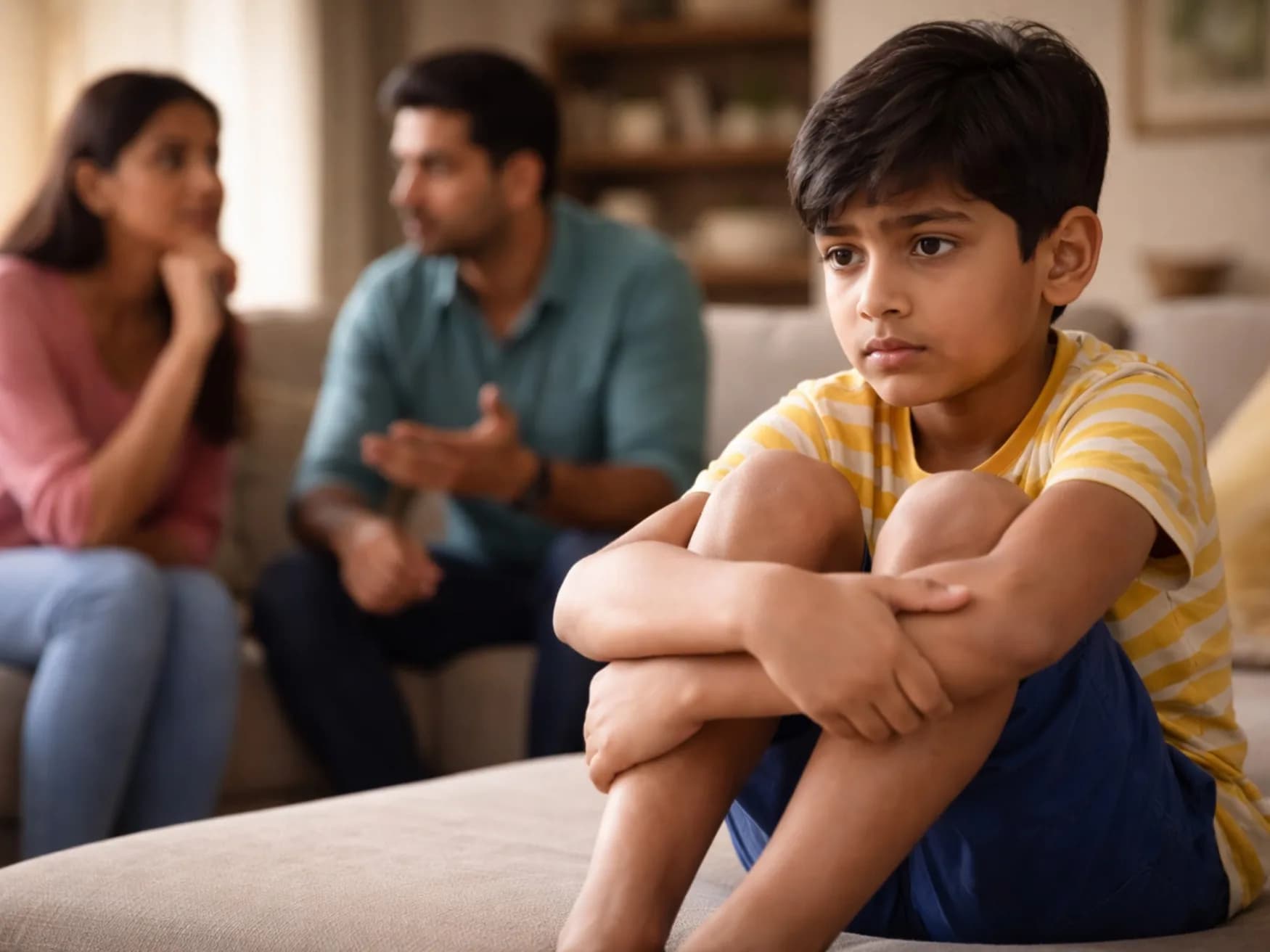
Signs of anxiety in children more than often appears as behaviour that is inconvenient, confusing, or easily moralised. A child becomes irritable. Withdrawn. Controlling. Tearful over small transitions. Overly compliant. Difficult to soothe. These responses are frequently addressed as discipline problems, temperament quirks, or developmental phases rather than recognised as early indicators of distress.
This is why anxiety in children is often identified late. Not because parents are inattentive, but because anxiety does not present as an obvious emotional state. It presents as adaptation.
Anxiety Is a Regulation Problem, Not a Personality Trait
One of the most persistent misunderstandings about childhood anxiety is the assumption that anxious children are simply “worriers.” This framing is misleading. Anxiety is not a cognitive preference; it is a nervous system organised around threat anticipation.
When parents search for signs of anxiety, they often expect visible fear, avoidance, or verbalised worry. In reality, children frequently lack the language to describe internal states. Their anxiety is expressed through behaviour rather than explanation.
This is why signs and symptoms of anxiety in children often look indirect, and why they are missed in otherwise “high-functioning” children.
Behavioural Changes That Are Misread as Defiance or Immaturity
One of the earliest signs of anxiety in kids is behavioural rigidity. Children may insist on routines, struggle with transitions, or react disproportionately to small changes. These behaviours are not attempts at control; they are attempts at predictability.
An anxious child may:
- become distressed when plans change,
- refuse activities they previously enjoyed,
- display irritability without clear cause,
- or withdraw socially in subtle ways.
These patterns are often addressed with correction rather than curiosity. The underlying distress remains untreated.
Anxiety Often Masquerades as Physical Complaints
Children frequently somaticise anxiety. Headaches, stomach aches, nausea, and fatigue are common expressions of internal stress. When medical explanations are ruled out, these complaints are sometimes dismissed as avoidance or attention-seeking.
In reality, they are among the most reliable signs of anxiety disorder in children.
This is particularly true in school settings, where signs of anxiety in students may appear as frequent visits to the nurse, difficulty concentrating, or sudden academic decline without clear learning issues.
GET HELP
Social Anxiety Is Not Shyness
Another commonly overlooked category involves signs of social anxiety. Children with social anxiety are not necessarily quiet or withdrawn. Some overcompensate through excessive talking, humour, or compliance. Others become disruptive to avoid scrutiny.
When parents ask “what are the signs of social anxiety?”, they often imagine a child who avoids interaction entirely. In reality, social anxiety is defined by fear of evaluation, not absence of social interest.
This is why signs and symptoms of social anxiety disorder are frequently misinterpreted as personality traits rather than distress responses.
Anxiety Attacks in Children Are Often Misidentified
Parents often search for signs of anxiety attack expecting dramatic panic. In children, anxiety attacks may present as meltdowns, freezing, or sudden emotional collapse.
Common signs of anxiety attack in children include:
- rapid breathing,
- crying without clear trigger,
- clinging,
- difficulty speaking,
- or appearing “shut down.”
These episodes are often labelled tantrums, particularly in younger children. This mislabelling delays appropriate intervention.
Separation Anxiety Is Not Limited to Toddlers
While signs of separation anxiety in babies at night are widely recognised, separation anxiety does not disappear with age. It often transforms.
Older children may resist sleepovers, experience distress before school, or struggle with independence milestones. These behaviours are frequently framed as regression or overattachment rather than anxiety responses.
Understanding what causes anxiety in children requires recognising that developmental transitions often activate underlying vulnerability.
Anxiety and Depression Are Not Mutually Exclusive
Children rarely present with neatly separated emotional categories. Signs of depression and anxiety often overlap, particularly in adolescents.
Low mood, irritability, sleep disruption, and withdrawal may reflect anxious avoidance rather than depressive withdrawal. Misclassification can lead to inappropriate interventions.
This overlap underscores the importance of assessment rather than assumption.
Why High-Achieving Children Are Often Missed
Children who perform well academically or behaviourally are frequently overlooked. Compliance, perfectionism, and overachievement can mask significant anxiety.
These children internalise distress, meeting external expectations while paying a private emotional cost. By the time anxiety is recognised, patterns are entrenched.
This is why signs of anxiety in teens often emerge suddenly, when the coping strategies that once worked begin to fail.
Treatment Requires More Than Reassurance
When parents ask how to treat anxiety in children, they are often offered reassurance-based strategies alone. While reassurance has its place, chronic anxiety requires skill-building and environmental support.
Effective treatment involves:
- helping children identify internal states,
- teaching regulation strategies,
- adjusting environmental stressors,
- and, when necessary, professional intervention.
Seeking doctors who treat anxiety disorders in children is not a sign of overreaction. It is an act of early prevention.
Supporting Without Escalating Fear
Parents often worry that naming anxiety will intensify it. In fact, avoidance tends to do more harm than acknowledgement.
Learning how to deal with separation anxiety in children or generalised anxiety involves tolerating discomfort without reinforcing avoidance. This balance is difficult, but essential.
FAQs
What are signs of anxiety in children? Behavioural rigidity, physical complaints, irritability, withdrawal, sleep difficulties, and disproportionate distress to change.
What are the signs of anxiety attack in children? Sudden crying, rapid breathing, freezing, clinging, or appearing overwhelmed without clear explanation.
What are the signs of social anxiety? Fear of evaluation, avoidance of social exposure, overcompensation, or distress around peer interactions.
What causes anxiety in children? A combination of temperament, environmental stressors, developmental transitions, and sometimes genetic vulnerability.
How to treat anxiety in children? Through regulation skills, environmental support, parental guidance, and professional therapy when needed.
Who treats anxiety disorders in children? Paediatric mental health specialists, including child psychologists and psychiatrists trained in anxiety disorders.
How can Samarpan help?
At Samarpan Health Centre, we often see families arrive after the early signs of anxiety in children have been misunderstood or missed for years. Many parents notice changes but don’t immediately connect them to anxiety in children, assuming it’s just shyness, moodiness, or school stress. Common signs can include frequent stomach aches, sleep difficulties, irritability, avoidance of school, or sudden emotional outbursts, while signs of anxiety in students may show up as perfectionism, fear of failure, or withdrawal in class. In younger children, signs of separation anxiety in babies at night can look like persistent crying, clinginess, or panic when a caregiver leaves. As children grow often overlap with signs of depression and anxiety, such as isolation, low mood, or loss of interest. Samarpan helps parents identify signs and symptoms of anxiety, including signs of social anxiety, signs and symptoms of social anxiety disorder, and even early signs of anxiety disorder before they escalate. Through child-focused therapy, family guidance, and structured emotional support, we help children feel safe expressing their fears while equipping parents with tools to respond calmly and effectively, preventing anxiety from shaping a child’s identity or future.
GET HELP